
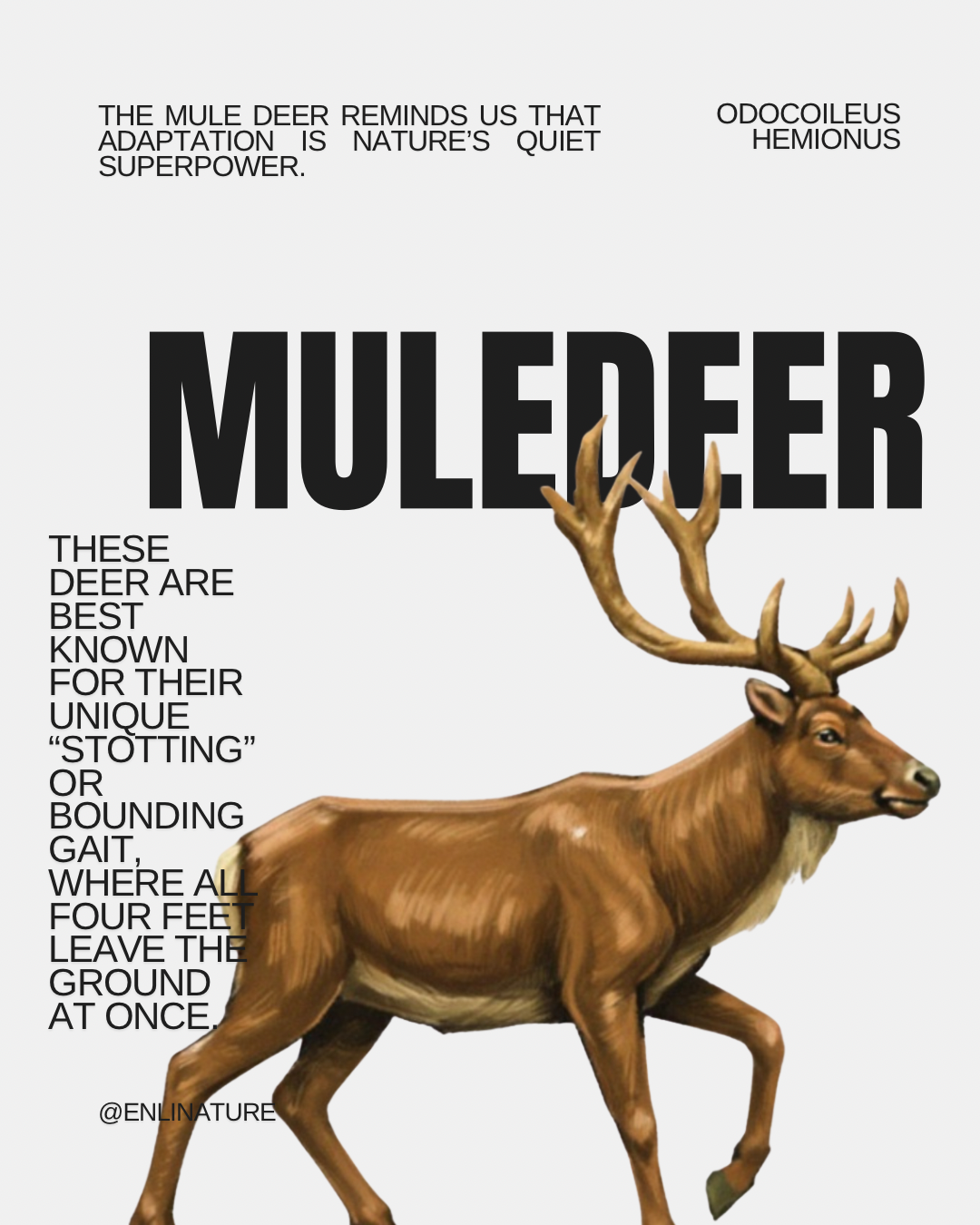
Mule Deer (Odocoileus hemionus): An Indicator of Western Ecosystems
The mule deer (Odocoileus hemionus) is one of North America’s most widespread and ecologically important large mammals. Recognized by its large, mule-like ears, forked antlers, and distinctive bounding gait, the mule deer has long been a symbol of the continent’s western landscapes. Beyond its cultural significance, the species plays a critical role in maintaining ecosystem balance and serves as an important indicator of habitat health.
Physical Characteristics
According to the National Wildlife Federation (NWF), adult mule deer typically stand 3–3.5 feet (0.9–1.1 m) at the shoulder, with body lengths ranging from 4.5 to 7 feet (1.4–2.1 m). Adult males (bucks) usually weigh between 130 and 280 pounds (59–127 kg), while females (does) are lighter and smaller. Mule deer coats vary from reddish-brown in summer to grayish-brown in winter, featuring a white rump patch and a black-tipped tail, which distinguishes them from white-tailed deer.
Geographic Range and Habitat
According to the USDA Forest Service, mule deer inhabit a broad range extending from western Canada through the western United States and into northern and central Mexico. They occupy diverse habitats including grasslands, shrub-steppe, deserts, foothills, forests, and mountainous regions. Seasonal migration is common, with some populations traveling up to 150 miles (240 km) between summer and winter ranges—one of the longest migrations of any terrestrial mammal in North America.
Behavior and Movement
One of the mule deer’s most distinctive behaviors is its stotting (or pronking) gait, where all four feet leave the ground in a single bound. According to the National Wildlife Federation, this movement allows mule deer to navigate rocky terrain efficiently and evade predators such as mountain lions and wolves. Mule deer rely heavily on keen hearing and smell, often detecting threats long before they are visible.
Diet and Ecological Role
According to the USDA Forest Service, mule deer are browsers, feeding primarily on leaves, twigs, shrubs, forbs, and woody plants rather than grasses. Studies show they may consume over 300 different plant species, depending on habitat and season. Through selective browsing, mule deer help shape plant communities, influence vegetation structure, and support predator populations—making them a keystone species in many western ecosystems.
Reproduction and Life Cycle
Mule deer breeding season, known as the rut, typically occurs from late October through December, according to the National Wildlife Federation. After a gestation period of approximately 200–210 days, does usually give birth to one or two fawns in late spring or early summer. Fawns are born with white spots that provide camouflage and remain hidden for the first few weeks of life. In the wild, mule deer generally live 9–11 years, although most do not reach this age due to predation, disease, or human-related factors.
Population Size and Density
Population density varies widely by region. According to USDA Forest Service ecological reviews, mule deer densities can range from less than 0.1 deer per square kilometer in arid landscapes to over 25–30 deer per square kilometer in high-quality habitats. In winter concentration areas, densities may temporarily exceed 100 deer per square kilometer. State-level estimates reported by the Mule Deer Foundation suggest populations in states like Colorado and Utah exceed 300,000 individuals, while other regions have experienced long-term declines.
Threats and Conservation Challenges
Although the mule deer is globally listed as Least Concern, according to conservation assessments summarized by the Mule Deer Foundation, many populations face serious regional threats. These include habitat fragmentation, road mortality, drought intensified by climate change, loss of migration corridors, and disease such as chronic wasting disease (CWD). Research indicates that declines in mule deer populations often reflect broader ecosystem stress, making their conservation essential beyond the species itself.
Why Mule Deer Matter
According to wildlife biologists, mule deer are often described as a “sentinel species”—their population trends reflect the overall condition of western landscapes. Protecting mule deer requires protecting intact habitats, clean water, migration routes, and climate-resilient ecosystems. In doing so, conservation efforts benefit not only wildlife but also the human communities that depend on healthy natural systems.